
Congolese humanitarians demand fair share of OCHA pooled funds
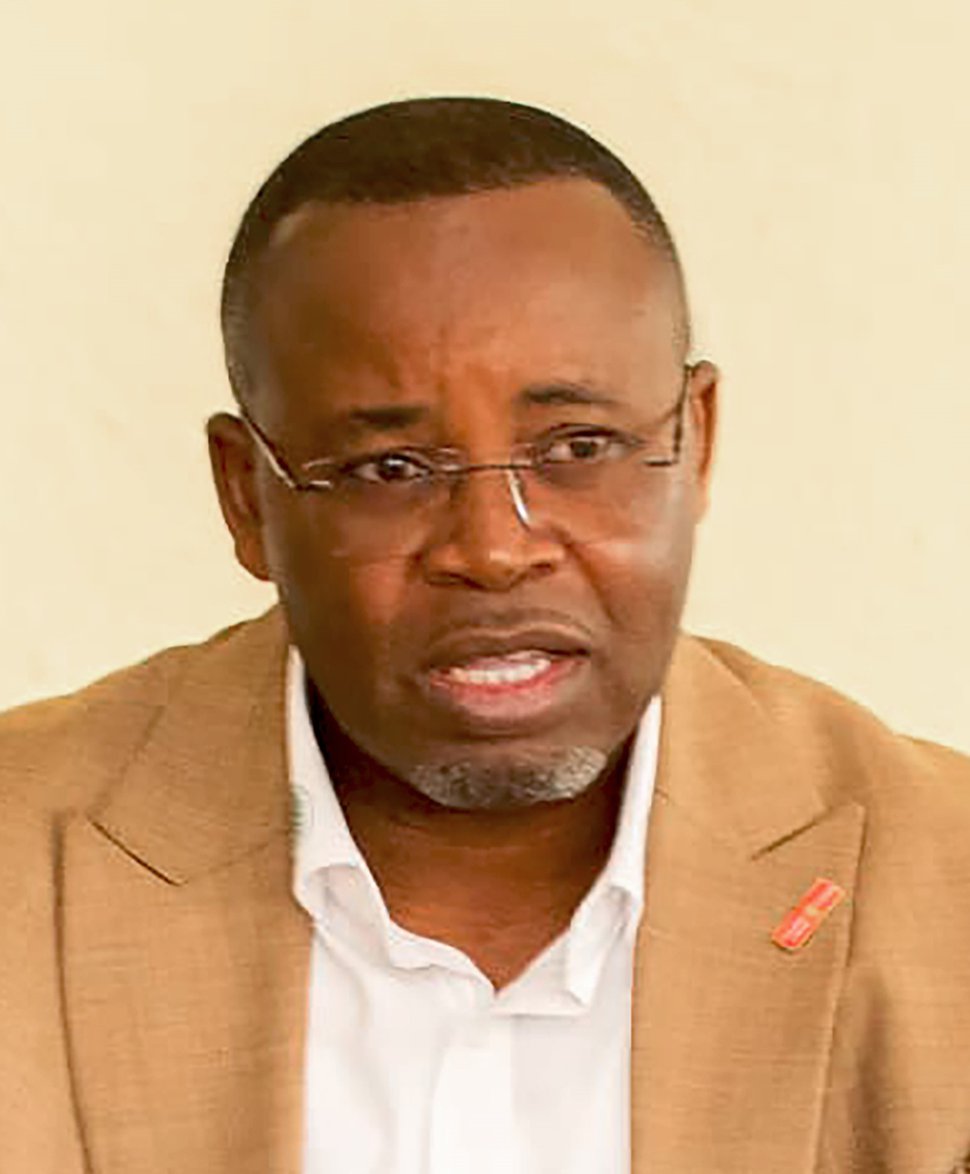
De-Joseph Kakisingi is a Congoloese gynaecologist and President the national NGO network CONAFOHD.
The UN country-based pooled funds have almost tripled in size this year, following the US government’s USD 2 billion contribution, but very little has been disbursed to local actors. In 2025, in the Democratic Republic of Congo, direct grants to local actors from the pooled funds exceeded 60 per cent of the total; this year, so far, the figure has fallen to 6 per cent. We are deeply concerned about this decline, even as the overall volume of available humanitarian funding has grown. We find this both difficult to understand and impossible to justify.
The argument being advanced is that the amounts made available have become so large that national NGOs supposedly lack the capacity to manage them. To support this position, some refer to the principle from the Grand Bargain, the humanitarian reform effort originating at the 2016 World Humanitarian Summit: “As local as possible, as international as necessary.”
In our view, this principle has been fundamentally misinterpreted. Some appear to believe that when funding volumes are large, they should automatically be managed by international actors, while local actors should only be entrusted with smaller amounts. This is not at all what the commitment was intended to mean.
The spirit of the Grand Bargain is quite different. It means that funding should first enable local and national actors to fully exercise their role and leadership. The capacities of national NGOs should be strengthened and utilised as a priority. Only once those capacities have been fully mobilised should resources that cannot be absorbed or managed locally be entrusted to UN agencies or international NGOs.
We do not know where this requirement or interpretation originated. It was not included in the Memorandum of Understanding signed between OCHA and the United States. We therefore have the impression that OCHA may have chosen to prioritise UN agencies because they themselves were facing significant funding reductions. This approach may have been seen as a way of providing them with a lifeline by allocating a substantial share of available resources to help compensate for losses resulting from recent funding cuts.
For us, this approach is neither fair nor equitable. It is contrary to the principles of ethics and runs directly against the principle of localisation.
Advocacy
We have undertaken a sustained advocacy effort to express our deep concern and dissatisfaction. I have had the opportunity, particularly during meetings with OCHA, to explain that this interpretation is incorrect and inconsistent with the recommendations of the Grand Bargain. These recommendations clearly recognise that national actors, who are at the frontline of humanitarian response, should be the primary recipients of funding intended to support humanitarian action.
We have held numerous meetings with OCHA, including discussions with OCHA’s Director of Operations John Ging and Alice Armanni Sequi, Chief of the OCHA Pooled Fund Management Branch, in Geneva, as well as several other OCHA officials. Our message has been clear: this approach is not working.
We have emphasised that it contradicts the donor’s own intentions, which explicitly called for funding decisions to align with the Humanitarian Reset agenda and strengthen localisation. In practice, the exact opposite has happened, with national NGOs operating on the frontlines being largely excluded from access to these resources.
The situation is even more contradictory because the UN agencies receiving these funds often work through international intermediaries, who in turn sub-contract local partners. As a result, a significant portion of the resources remains absorbed by multiple layers of administration and bureaucracy, while a much smaller proportion actually reaches affected populations. In the best-case scenario, only about half of the funding may ultimately benefit those most in need.
From our perspective, this is ethically unacceptable, especially in a context where the Democratic Republic of Congo faces immense humanitarian needs that require every available resource to be used as effectively as possible.
Next phase
The US government has announced that it will contribute another USD 1.8 billion to the pooled funds this year. We have engaged in extensive discussions with OCHA to present what we believe would constitute a fair and equitable approach for this next tranche. We have advocated for national NGOs to regain their legitimate place within funding allocations, given their permanent presence on the ground and their frontline role in serving affected communities.
As a result of these discussions, we are moving toward a degree of consensus. OCHA has presented several proposals aimed at improving access to these resources for national NGOs. However, we do not believe that these proposals yet constitute a genuine guarantee. They are not supported by measurable indicators that would allow stakeholders to verify whether funding is actually reaching national NGOs.
This is why we are calling for a minimum of 40 per cent of funding to be earmarked in advance and made directly accessible to national NGOs in DRC. Such a measure would provide a concrete mechanism for monitoring compliance and objectively assessing whether commitments are being honoured.
Finally, regarding the commitments repeatedly made by the UN Emergency Relief Coordinator Tom Fletcher, we are left with the impression that there is a significant gap between rhetoric and reality. I have raised this issue several times, including during our discussions with OCHA.
When we listen to Fletcher, his message is clear. He speaks about localisation, local leadership, and the transformation of the humanitarian system. His discourse reflects precisely what national NGOs have been advocating for over many years. However, when we examine actual funding decisions, we often observe the opposite. The gap between public statements and operational practice appears substantial.
Significant setback
With the influx of US funding, we have witnessed a significant setback in localisation, not only in terms of funding but also in participation and decision making. In previous years, national NGOs represented on the Advisory Board were actively involved in strategic discussions, helping shape allocation priorities and validate funding decisions. This time, however, there was no meaningful consultation or dialogue; local actors were simply informed of decisions that had already been made. The result has been a clear regression in both access to funding and access to influence, with national organisations receiving a much smaller share of resources while also being excluded from processes that directly affect humanitarian priorities. This raises serious concerns about the commitment to localisation, which is fundamentally about both resources and the sharing of power.
The question remains: Is Tom Fletcher fully aware of how these decisions are being implemented or are his policy directions simply not being translated into practice by those responsible for implementation?
Today, we are genuinely asking ourselves whether the discourse on localisation is merely intended to reassure national NGOs and affected communities, or whether there is a genuine commitment to transform the humanitarian system that has yet to be reflected in funding mechanisms and allocation decisions.
This is a fundamental challenge for the future of localisation and for the credibility of the commitments made by the humanitarian system as a whole.
________________________________________________________________
De-Joseph Kakisingi is a gynecologist and humanitarian leader from the Democratic Republic of Congo. President and co-founder of CONAFOHD (Conseil National des Fora des ONGs Humanitaires et de Développement), a network of over 500 local and national actors, he plays an active advocacy role in the Ebola response.